





Module 1 · ABC‑04‑FO · English
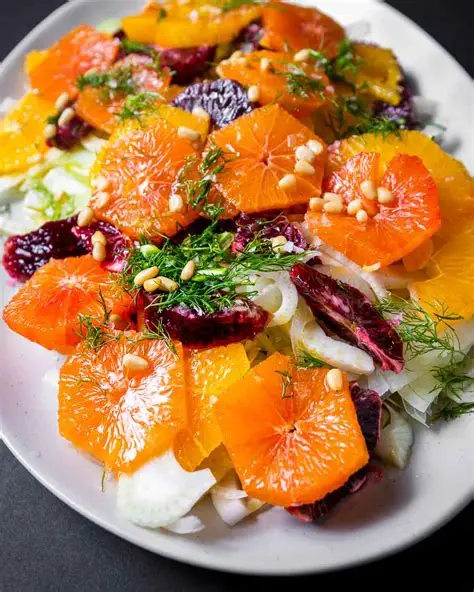
INSALATA DI FINOCCHI E ARANCE
Recipe template
Origin
Mediterranean Winter Cuisine Traditional in Southern Italy where fennel and citrus are seasonal staples.
Diet
Vegan Vegetarian Gluten‑free Dairy‑free High‑fiber
Allergens
None (Check optional additions such as nuts or seeds if used.)
Season
Winter
Dish type
Appetizer
Ingredients
16 items- 1 large
- Fennel bulb, trimmed and thinly sliced
- 2 medium
- Oranges, peeled and segmented
- 2 tbsp
- Extra‑virgin olive oil
- 1 tbsp
- Lemon juice (optional)
- To taste
- Salt
- To taste
- Black pepper
- A few fronds
- Fennel tops for garnish
- Optional
- Olives, toasted seeds, or fresh herbs
Method
7 steps- 1 1. Wash and trim the fennel, removing tough outer layers and stalks.
- 2 2. Slice the fennel thinly using a knife or mandoline.
- 3 3. Peel the oranges, remove the pith, and cut into clean segments.
- 4 4. Combine fennel slices and orange segments in a bowl or plate.
- 5 5. Dress with olive oil, lemon juice (optional), salt, and pepper.
- 6 6. Mix gently to avoid breaking the orange segments.
- 7 7. Garnish with fennel fronds or optional toppings and serve.
Sustainability impact
Energy efficiency — Raw dishes eliminate cooking fuel use, making them ideal for low‑impact food education. Reduced food waste — Fennel fronds, citrus zest, and leftover segments can be reused in other recipes. High nutritional value — Seasonal produce retains more vitamins, reducing the need for supplements or fortified foods. Climate‑aligned eating — Promotes eating according to natural seasonal cycles.
Other Uses
Food Reuse
Fennel fronds — Use as garnish, in pesto, or in vegetable stock. Citrus zest — Add to dressings, teas, or desserts for extra aroma. Leftover segments — Use in smoothies, fruit salads, or infused water. Fennel stalks — Add to soups or broths for flavour.
Non-Food Related
Sensory training — Learners practice identifying aromas, textures, and flavour contrasts. Accessibility practice — Ideal for easy‑read, high‑contrast, and screen‑reader formats. Nutrition education — Demonstrates vitamin C, fiber, hydration, and digestive benefits. Seasonality awareness — Helps learners understand winter produce cycles and climate‑aligned eating.